

Wellbeing Guides
What Is Sound Healing? Sessions, Instruments and What to Expect
You do not need musical experience to attend a sound bath. Knowing the format, sound level and facilitator’s approach helps you choose a session that suits you.
 By Rob Horsfall
Advertisement / affiliate disclosure: This guide contains affiliate links. If you buy through a link marked “Ad”, Review My Retreat may earn a commission at no extra cost to you. As an Amazon Associate, Review My Retreat earns from qualifying purchases.
Common format: A guided listening experience using instruments, voice or recorded sound.
Terminology: Sound healing is a broad wellbeing label; sound bath usually describes a group listening format.
Clinical distinction: A sound bath does not by itself constitute HCPC-regulated music therapy.
Before booking: Check seating, volume, access, session length and how to take a break.
What is sound healing?
Sound healing is a broad name used for wellbeing practices involving sound, vibration and focused listening. You might encounter it as an evening sound bath, a gong session, a one-to-one appointment or an activity within a retreat. The word healing expresses how a practice is presented; it does not establish that a particular session treats an illness. The useful starting point is to ask what the facilitator actually does and what participants are invited to do.
For many newcomers, a group listening session is the most straightforward introduction. You settle into a comfortable position while a practitioner plays instruments, sometimes with a spoken introduction or quiet pauses. You may choose to listen attentively without trying to make anything special happen. If your main interest is a longer stay, our guide to spiritual retreats explains the wider range of practices that can appear alongside sound.
Bowls, gongs, voice and other instruments
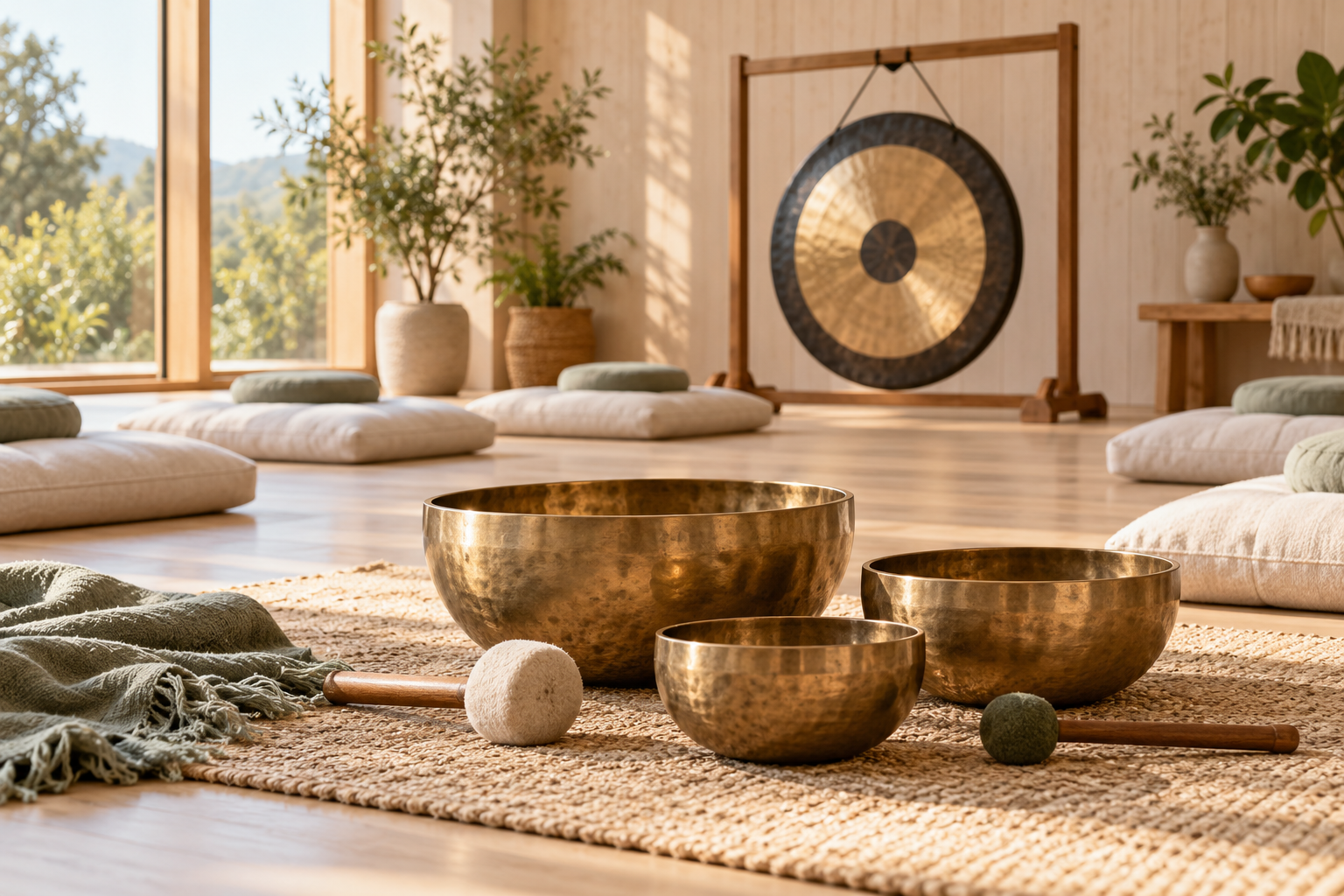
A session may use metal singing bowls, crystal bowls, gongs, chimes, drums, tuning forks or the human voice. The College of Sound Healing’s training descriptions illustrate this variety. These instruments produce different kinds of attack, resonance and texture. A softly struck bowl is a different listening experience from an extended gong sequence, so photographs of an instrument collection cannot tell you exactly what an event will sound like.
Ask which instruments are central, whether sound moves around the room and whether anything will be placed on the body. Listening to instruments from a mat differs from a one-to-one appointment involving physical contact or direct vibration. Those details should be explained beforehand, with consent for any contact. You do not need to buy an instrument before attending. If you later want to learn to play, an introductory music or instrument lesson can help you explore sound without starting with expensive equipment.
What happens during a sound bath?
The organiser should describe the sequence and duration, including time for arrival and settling afterwards. You may be invited to lie on a mat, sit on a chair or use cushions. There might be a short relaxation introduction before the instruments begin. Some sessions include voice, guided imagery or breath awareness; others concentrate on listening. The term sound bath refers to an immersive listening experience rather than bathing in water.
During the session, attention may move between the sound, physical sensations and ordinary thoughts. You might feel settled, distracted, curious or simply aware that the floor is firmer than expected. None of these reactions means you have failed. There should be a clear way to change position or take a break. At the end, allow enough time to sit up comfortably and orient yourself before returning to the day, particularly if you have been lying still for a while.
How sound healing differs from music therapy
In the UK, music therapy is a defined professional practice. The British Association for Music Therapy describes an established clinical intervention delivered by HCPC-registered music therapists, with a therapeutic relationship at its centre. It can involve active musical interaction and communication tailored to a person’s needs. A group wellbeing event using similar instruments does not automatically have the same professional framework or purpose.
If you need support for a diagnosed condition, identify whether you are seeking a recreational activity or clinical care. Ask what the practitioner’s qualification covers and, where a regulated professional title is claimed, check the HCPC register. Membership of a voluntary wellbeing association is a different form of credential. Both a clear explanation of scope and an honest statement of limits are more useful than a long list of unfamiliar certificates.
What does the research show?
Sound and music are being studied in many settings, but findings should be matched to the actual intervention. A 2023 randomised study of 50 adults investigated the immediate response to a singing-bowl session, comparing it with muscle relaxation and a waiting-list group. It reported encouraging short-term changes. That small, single-session study cannot establish that every sound bath has lasting health effects or that bowls replace established treatment.
A 2025 systematic review found potential in singing-bowl research while highlighting varied study designs and the need for stronger controlled trials and follow-up. The US NCCIH overview of music and health likewise explains that research findings depend on the intervention and population. Evidence about personalised clinical music therapy should not be silently transferred to a commercial listening session. Be cautious with specific claims about frequencies curing disease, resetting organs or producing guaranteed emotional release.
Volume, comfort and individual needs
Sound can be pleasant without being comfortable for everyone at every volume. Ask how loud a session becomes, how far you will be from instruments and whether seating near an exit is possible. The NCCIH notes that excessive volume can harm hearing and that music can evoke distressing associations. A welcoming description should leave room for different responses, rather than suggest that discomfort is proof that the session is working.
If everyday sounds feel painfully loud, the NHS information on hyperacusis recommends seeking medical advice. Explain relevant hearing or sensory concerns before booking and discuss suitability with your healthcare professional where appropriate. Practical access matters too: stairs, floor-level seating, dim lighting, incense and crowded layouts can affect a visit. Asking for a chair or a fragrance-free setting is a reasonable access question, not a request to participate less fully.
Questions that help you choose a session
Look for an event description that answers ordinary questions: who leads it, what happens, how many people attend, what equipment is supplied and what the fee covers. A session described as beginner-friendly should explain how newcomers are introduced. If sound is one item on a residential schedule, check whether attendance is optional and what happens if you prefer quiet time instead. Our guide to different retreat formats can help you compare a standalone class with a longer programme.
Read cancellation terms and the contact arrangements before paying. If an event also promises counselling, trauma work or another specialist service, check that separately rather than assuming one qualification covers everything. A useful facilitator can explain the boundaries of their work in plain language. You should not need to accept a health claim or share a personal history with a whole group in order to enjoy a listening activity.
What to bring to your first sound bath
Start with the organiser’s actual equipment list. If mats, blankets and bolsters are provided, you may only need comfortable clothes and an extra layer. If they are not, think about cushioning and warmth as well as a yoga mat: a thin travel mat may be convenient to carry but less comfortable for lying still. Our guides to yoga blankets and meditation cushions explain optional supports for different resting positions.
Arrive with enough time to check the room, choose a suitable place and mention any agreed adjustments privately. Silence your phone, and ask before photographing instruments or other participants. A brief note afterwards can help you remember what you liked: perhaps the quieter instruments, a seated position or the length of the session. That is more useful for choosing a future event than deciding whether you had the experience someone else described online.
How it can fit into a retreat
On a multi-day programme, a sound session may be a short evening activity rather than the main focus. Compare the complete schedule: a day of intensive yoga followed by sound offers a different balance from a largely quiet weekend. Check the amount of free time and whether shared spaces remain available during sessions. The right fit depends on what you want from the whole stay, not the number of wellbeing terms in the description.
If you enjoy listening, you can explore the practice gradually through an accessible local event before committing to travel. If you prefer silence, a quieter form of retreat may suit you better. Neither response needs a spiritual explanation. Sound can be approached with curiosity and respect while keeping expectations realistic, asking clear questions and retaining the freedom to choose an activity that feels comfortable for you.
Before booking again, note which practical details helped: the chair, the quieter corner, the instrument mix or a shorter duration. Use those observations to ask a more specific question next time.


Optional things to bring
Check the organiser’s equipment list before buying anything. What you already own may be enough, and some retreats provide practice equipment.
Optional support for seated listening; no clinical benefit claimed. View Lotuscrafts LOTUS meditation cushion, 15cm on Amazon (Ad).
Questions before you choose
Do I need musical experience?
No musical skill is normally needed for a listening-based sound bath. Check whether the event also includes singing, instrument playing or training, because those formats ask for different kinds of participation.
Do I have to lie on the floor?
Not necessarily. Ask whether chairs and other supports are available. A seated position may be more suitable for your comfort or access needs.
Is a sound bath the same as music therapy?
No. UK clinical music therapy is delivered by HCPC-registered music therapists within a professional therapeutic framework. A sound bath label alone does not establish that service.
Can sound healing cure a medical condition?
Current evidence does not justify a general cure claim for commercial sound baths. Keep existing care in place and seek qualified advice for health concerns.
Should I buy a singing bowl before attending?
No. A listening session generally uses the facilitator’s instruments. Check the event details, and wait until you understand your interest before buying equipment.
Sources and further reading
- College of Sound Healing: instruments and sound-bath training descriptions
- BAMT: What is music therapy?
- HCPC: professional register
- Acute relaxation response to singing bowls: randomised trial
- Singing bowl interventions: 2025 systematic review
- NCCIH: Music and health
- NHS: Hyperacusis
Programmes, places and practical arrangements can change. Check the organiser’s current information before making plans. Send a correction or an update.
Plan your next step
Explore sound at your own pace.
Start with a session whose format, sound levels and access arrangements are clear. Ask the facilitator what to expect and choose whether to take part in a way that feels comfortable for you.
Return to the guide ↑About Rob Horsfall
Rob has been interested in spirituality since visiting India in 2002. After completing his philosophy studies at university, he continued studying the Buddha's teachings in Sri Lanka. He returned in 2011 and now spends his time developing Review My Retreat, studying acupuncture and integrating insights from different spiritual traditions into everyday life.
You must be logged in to post a comment.