

Advertisement / affiliate disclosure: This guide contains affiliate links. If you buy through one of these links, Review My Retreat may earn a commission at no extra cost to you. As an Amazon Associate, Review My Retreat earns from qualifying purchases.
The best essential oil brand depends on what matters most to you: organic certification, batch testing, a wide choice, value or clear safety information. This guide compares nine established brands that are based in the UK or readily available to UK shoppers.
Quick answer: Tisserand is a strong choice for heritage and broad availability; Sacred Soul Holistics stands out for publishing batch-specific GC/MS information; Ecodrop is worth considering if certified organic oils are your priority; and Freshskin is especially useful for makers who need larger sizes and product documentation.
Last checked: 2 September 2026. This is a comparison of publicly available product, labelling and company information, not an independent laboratory test. Formulations, certifications, prices and ranges can change, so check the current product label and supplier documents before buying.
How we compared essential oil brands
We looked for practical signs that help a buyer judge a supplier rather than relying on marketing terms. These included:
- Clear identity: the botanical name, plant part, country of origin and extraction method.
- Traceability: a batch or lot number and a realistic best-before or expiry date.
- Quality documentation: access to GC/MS or certificate-of-analysis information where offered. A safety data sheet is useful for handling information, but is not proof of purity by itself.
- Honest labelling: a clear distinction between a pure essential oil, a diluted oil, a blend and a synthetic fragrance oil.
- Safety guidance: instructions for dilution, storage and any oil-specific precautions.
- Value: sensible pricing for the botanical. Rare, low-yield oils should not cost the same as high-yield citrus oils.
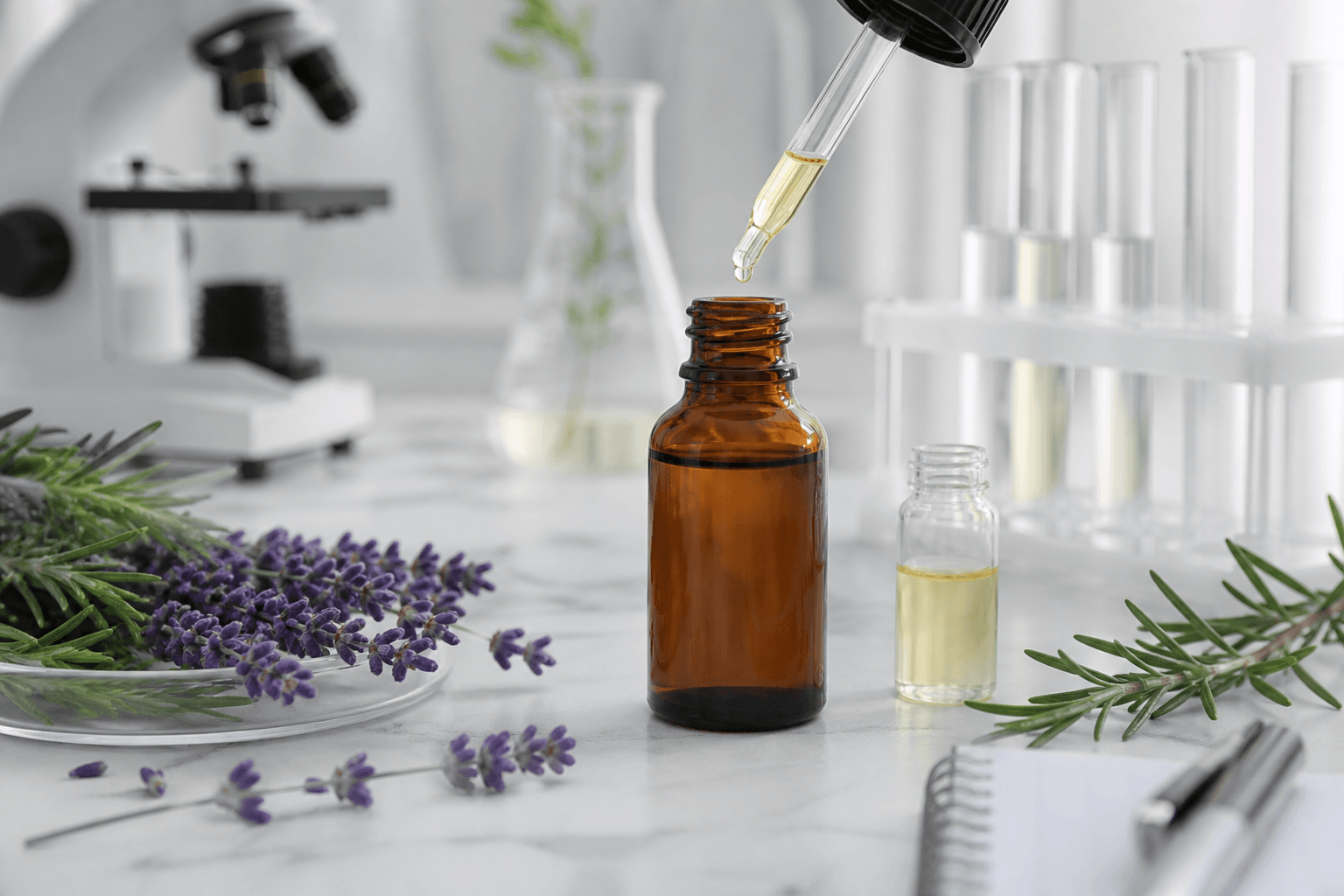
The Aromatherapy Trade Council advises buyers to look for the botanical name and request GC/MS results, safety data and details of origin, plant part and extraction. Terms such as “therapeutic grade” are not a substitute for this information.
Essential oil brands in the UK: quick comparison
| Brand | Good for | Useful quality signal | UK position |
|---|---|---|---|
| Tisserand | Heritage and easy availability | Botanical names and sourcing standards | UK brand; blended and bottled in England |
| Sacred Soul Holistics | Testing transparency | Batch-specific GC/MS information on product pages | UK specialist |
| Absolute Aromas | Professional and home use | In-house laboratory and industry involvement | UK brand founded in 1994 |
| Amphora Aromatics | Range and value | Long-established family supplier | Bristol business founded in 1984 |
| Ecodrop | Certified organic options | Soil Association certification details | UK company founded in 2016 |
| Freshskin | Makers and larger quantities | Product safety, IFRA and allergen documents | UK family business |
| Nikura | Beginners, blends and creative uses | Botanical details and clear product categories | UK family-owned brand since 2016 |
| Aroma Energy | Budget-friendly sizes | Origin, plant part and extraction listed on key products | UK company; oils bottled in the UK |
| Gya Labs | Wide online selection | Brand states that it uses GC/MS testing | International brand available to UK buyers |
Our shortlist of essential oil brands
1. Tisserand Aromatherapy
Good for: shoppers who want a familiar British brand with a long track record.
Tisserand began in 1974 and says its essential oils are 100% natural, pure, vegan and cruelty-free. The company lists full botanical names and explains whether oils are organic, ethically harvested or wild crafted. Its oils are blended and bottled at its West Sussex facility.
Consider: the range includes pure oils as well as ready-to-use blends, rollerballs and other products, so read the label to confirm whether you are buying an undiluted single oil or a formulated product.
2. Sacred Soul Holistics
Good for: buyers who want to see batch-specific testing information before choosing an oil.
Sacred Soul Holistics publishes GC/MS information on individual product pages and gives detailed guidance on dilution, topical use and oil-specific risks. It also makes a clear distinction between genuine quality evidence and the unregulated phrase “therapeutic grade”.
Consider: not every oil is certified organic. Check the cultivation and certification details for the exact product you are considering.
3. Absolute Aromas
Good for: home users and aromatherapy professionals who value an established UK supplier.
Founded in 1994, Absolute Aromas sells organic and non-organic essential oils, carrier oils and blends. The company says it uses laboratory facilities to assess each batch and is involved with both the International Federation of Essential Oils and Aroma Trades and the Aromatherapy Trade Council.
Consider: check the product format carefully because the catalogue includes pure oils, pre-diluted products and blends.
4. Amphora Aromatics
Good for: shoppers looking for a broad range and competitive pricing from a long-established supplier.
Amphora Aromatics is a family company that started in Bristol in 1984. It supplies pure essential oils and aromatherapy products to consumers and trade customers, with an emphasis on keeping prices accessible.
Consider: range size and low price do not prove purity. Use the botanical, origin and safety information for the specific oil as your guide.
5. Ecodrop
Good for: buyers prioritising certified organic oils and sustainability information.
Ecodrop was founded in London in 2016 and offers organic essential oils alongside skincare and home-fragrance products. Its website publishes Soil Association licence details and identifies certified products on their individual pages.
Consider: organic certification covers how the plant material was produced; it does not automatically mean an oil is safer, more effective or suitable for every use.
6. Freshskin Beauty
Good for: home formulators, soap and candle makers, and buyers who need larger bottle sizes.
Freshskin is a UK family business that sources oils and ingredients from growers around the world. Many product pages provide safety data, IFRA information, allergen declarations and CLP details, which is useful for makers comparing ingredients and handling requirements.
Consider: the site sells both essential oils and fragrance oils. Fragrance oils may be partly or wholly synthetic, so do not assume the two categories are interchangeable.
7. Nikura
Good for: beginners, diffuser users and makers who want single oils and blends from one supplier.
Nikura describes itself as a UK-run, family-owned business operating since 2016. Its essential oils are sourced internationally, then blended and bottled in the UK. The range also includes fragrance oils, carrier oils and creative supplies.
Consider: as with Freshskin, make sure the listing says “essential oil” rather than “fragrance oil”, and check whether a blend is intended for diffusion, cosmetic formulation or another use.
8. Aroma Energy
Good for: value-focused shoppers and makers who want a choice of bottle sizes.
Aroma Energy is an active UK company whose essential oils are bottled in the UK. Key product pages list the botanical name, origin, plant part and extraction method, and the company provides regulatory documents for makers.
Consider: some of the wider “Life Oils” marketing uses stronger wellness language than we would rely on when assessing a purchase. Judge the individual oil by its label, documentation and intended use.
9. Gya Labs
Good for: shoppers who want a large online range and easy marketplace availability.
Gya Labs is an international brand rather than a UK-based producer, but its essential oils, organic oils, carrier oils, hydrosols and blends are readily available to UK buyers. The company states that it uses GC/MS testing as part of its quality process.
Consider: availability through a marketplace is convenient, but always check the seller, the current label and the documentation for the exact bottle. Do not treat a brand-wide purity claim as a substitute for product-specific information.
Essential oil safety
Essential oils are highly concentrated. Follow the product label, do not ingest them, and do not apply undiluted oil to the skin. Keep bottles away from children and eyes. Some oils can irritate skin or increase sensitivity to sunlight, and extra care is needed around pregnancy, babies, pets, health conditions and medicines. If in doubt, ask an appropriately qualified healthcare professional or aromatherapist.
Aromatherapy products are not automatically medicines. The MHRA explains that classification depends on a product’s composition, presentation and intended use. The Advertising Standards Authority also warns that medicinal claims for unlicensed aromatherapy products are not permitted.
Frequently asked questions
Does “100% pure” guarantee quality?
No. It is a useful claim only when supported by clear botanical identity, traceability and appropriate testing. Look for product-specific information rather than relying on the front label alone.
Is organic essential oil better?
Organic certification can verify how the source plant was grown and processed, but it does not make an oil automatically safer, purer or more suitable for you. Check the certifier and the exact product covered.
What is GC/MS testing?
Gas chromatography–mass spectrometry separates and identifies many of an oil’s chemical components. It can help assess identity and detect some forms of adulteration, but the usefulness of a report depends on the sample, the laboratory and expert interpretation. Batch-specific reports are more informative than a general statement that a brand tests its oils.
Are expensive essential oils always better?
No. Price alone does not prove quality. However, the plant yield and extraction process matter: genuine rose, neroli and sandalwood oils should normally cost considerably more than sweet orange or lemon. A suspiciously cheap rare oil may be diluted, blended or synthetic, so read the full description.
The verdict
There is no single best essential oil brand for every buyer. Start with the type of oil and intended use, then compare traceability, testing, certification, safety information and price. Tisserand, Sacred Soul Holistics, Absolute Aromas and Amphora Aromatics offer different strengths for general buyers, while Ecodrop suits an organic-first brief and Freshskin is particularly practical for makers. Whichever brand you choose, the product-specific label and documentation matter more than a broad promise of “natural” or “therapeutic grade”.
You must be logged in to post a comment.