

The buying guide 2026 edition
Eco Yoga Mats UK: 4 Options Compared
Choose a mat that suits your practice, lasts well and makes its materials clear.
Advertisement / affiliate disclosure: This guide contains affiliate links. If you buy through a link marked “Ad”, Review My Retreat may earn a commission at no extra cost to you. As an Amazon Associate, Review My Retreat earns from qualifying purchases.
An “eco” label tells you little without the material breakdown. These four mats all use rubber, while some add a polyurethane surface or recycled content. Their grip, thickness, weight and cleaning requirements differ.
Choose for the classes and floor you use regularly, then consider how long you can keep the mat in service. A usable mat does not need replacing simply because another carries a greener label.
What makes a yoga mat a lasting choice?
A useful mat balances the surface under your hands with the support beneath your body. Thickness influences cushioning, while texture and the top layer affect how the mat feels during practice. Length and width matter too, especially if you like room to stretch out. Think about carrying it to class, cleaning it afterwards and storing it between sessions: these everyday details help you choose a mat that fits your routine.
Look for a named base and surface material. Natural rubber mats may still contain additives or a synthetic top layer.
Dry-room grip and sweat management are different. A towel may be useful when moisture sits on the surface.
Compare thickness, weight and cleaning instructions. Keep a usable mat rather than replacing it for a greener label alone.
The shortlist at a glance
Four yoga mats, with the material trade-offs explained
Compare the format and practical details, then read each profile before choosing. Amazon links are marked Ad.
| Option | Useful for | Details | Keep in mind | Shop on Amazon |
|---|---|---|---|---|
| 01Manduka eKO Yoga Mat 5mm | Natural rubber and recycled content | 5mm thickness · Standard: 180 × 66cm | This is a substantial mat to carry; the published weight varies by generation and market, so check the exact listing. Sweat can remain on the surface, so heated classes may call for a towel; avoid it if you have latex sensitivities. | Amazon (Ad) → |
| 02Jade Harmony Yoga Mat | Textured natural-rubber surface | Approximately 4.7–5mm thick · Standard and longer versions | Natural rubber contains latex proteins. Jade advises avoiding outdoor sunlight, and the mat needs gentle care rather than a general-purpose cleaning spray. | Amazon (Ad) → |
| 03Liforme Classic Yoga Mat | Alignment markings and generous space | 185 × 68cm · Approximately 4.2mm thick | It is a mixed-material mat, not simply a sheet of natural rubber. At about 2.5kg, it also asks more of your shoulder than a lightweight travel mat. | Amazon (Ad) → |
| 04Yogi Bare Original PAWS | Rubber base with a PU surface | 4mm profile · Natural rubber and PU | Check the particular Original PAWS listing: sizes and designs differ between generations. The material mix includes PU, so avoid treating a natural-rubber base as proof that the entire mat is plastic-free. | Amazon (Ad) → |
Links marked Ad open Amazon. Check the exact model, seller, current price, delivery and availability there. Product ranges and specifications can change.
A closer look
Explore the shortlist
Product photographs show example colours or sizes. Images and buttons open Amazon affiliate links (Ad).
Manduka eKO Yoga Mat 5mm
- 5mm thickness
- Standard: 180 × 66cm
- Natural rubber; current version includes recycled content
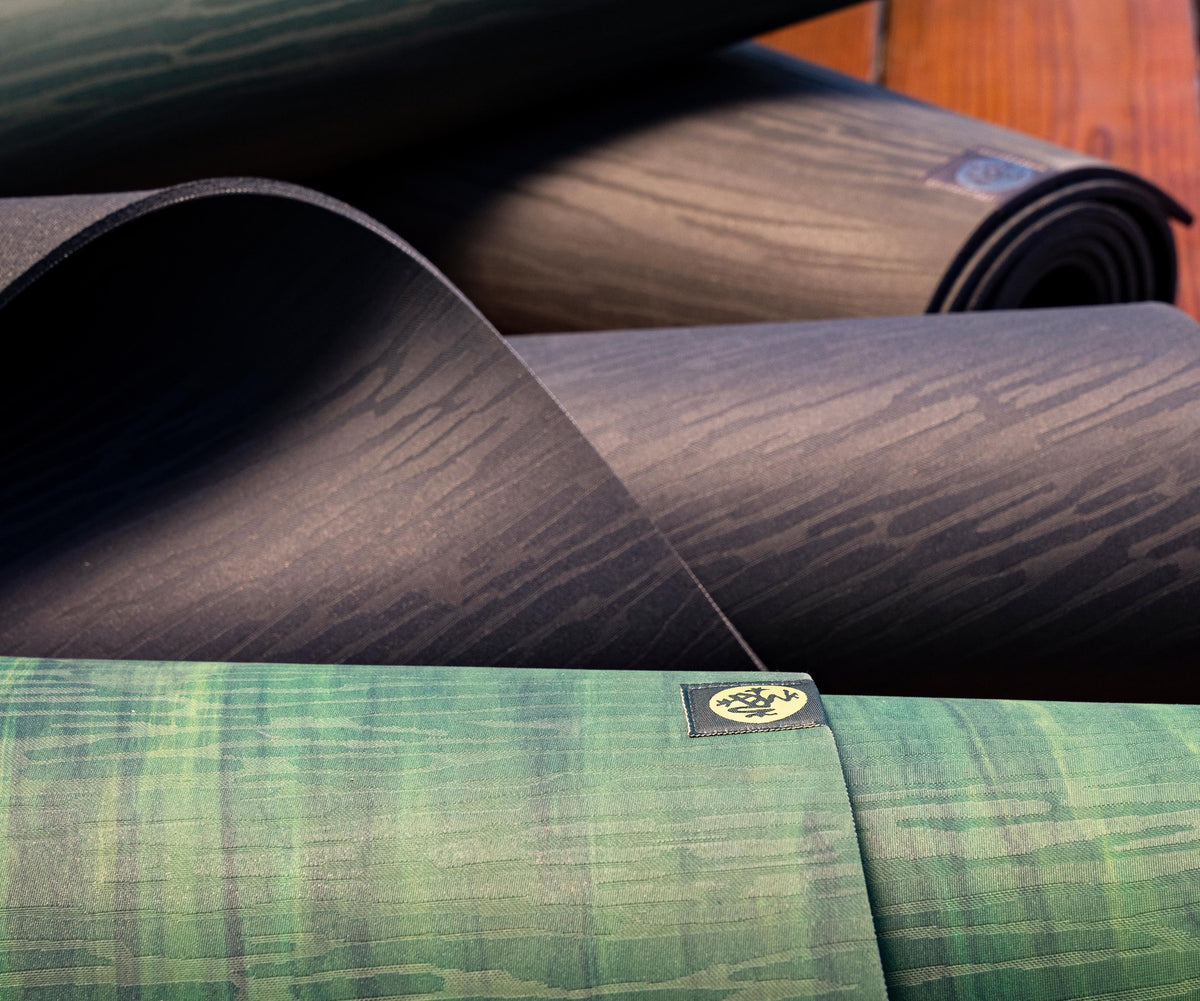
A substantial rubber mat for a regular home or studio practice. Manduka documents a natural-rubber construction with more than 30% recycled content in the current eKO version, plus a closed-cell surface that keeps moisture from soaking into the mat.
Choose this if cushioning and a textured rubber feel matter more than packing light. Amazon listings can include earlier eKO generations, so match the thickness and material description rather than relying on the colour photograph.
Before you choose: This is a substantial mat to carry; the published weight varies by generation and market, so check the exact listing. Sweat can remain on the surface, so heated classes may call for a towel; avoid it if you have latex sensitivities.
Jade Harmony Yoga Mat
- Approximately 4.7–5mm thick
- Standard and longer versions
- Natural-rubber construction
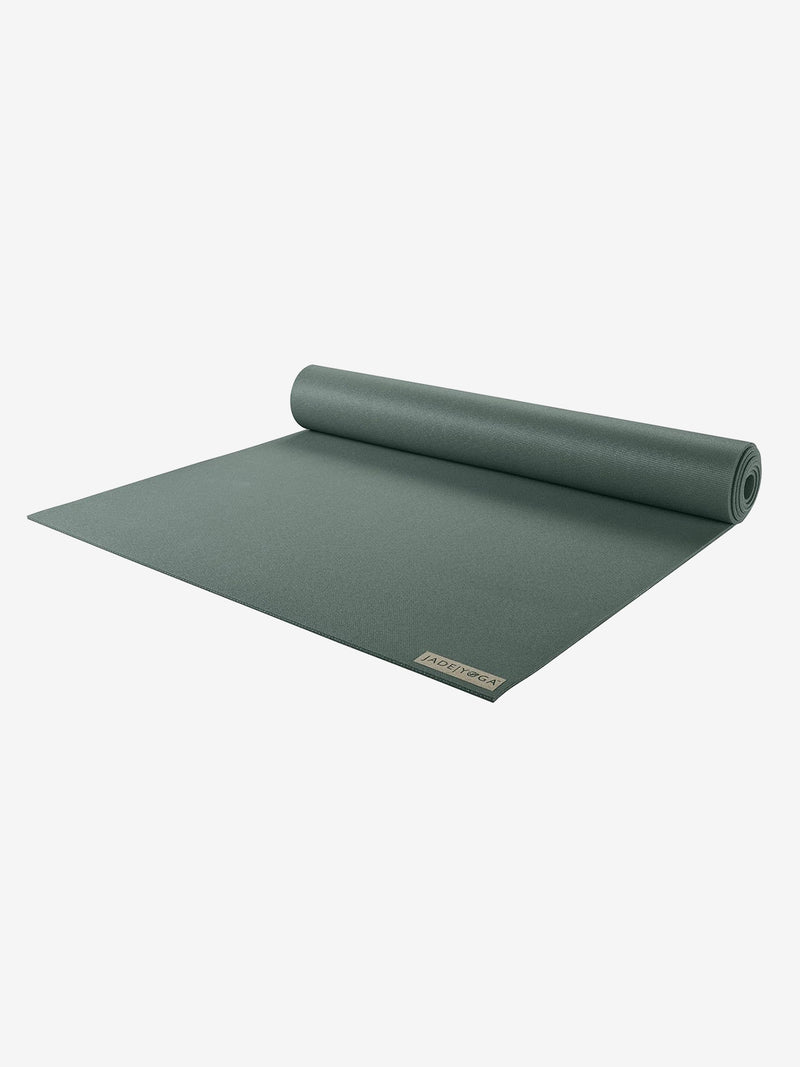
The Harmony is a straightforward option for people who like the feel of textured rubber. Jade lists natural rubber as the principal material and offers different lengths, giving you a useful choice if a short studio mat leaves your feet hanging over the edge.
Compare the standard and long versions carefully. Retailers may round the manufacturer’s 3/16-inch thickness to 5mm; this is not the same thing as a much thicker, soft exercise mat.
Before you choose: Natural rubber contains latex proteins. Jade advises avoiding outdoor sunlight, and the mat needs gentle care rather than a general-purpose cleaning spray.
Liforme Classic Yoga Mat
- 185 × 68cm
- Approximately 4.2mm thick
- Natural rubber base and polyurethane surface
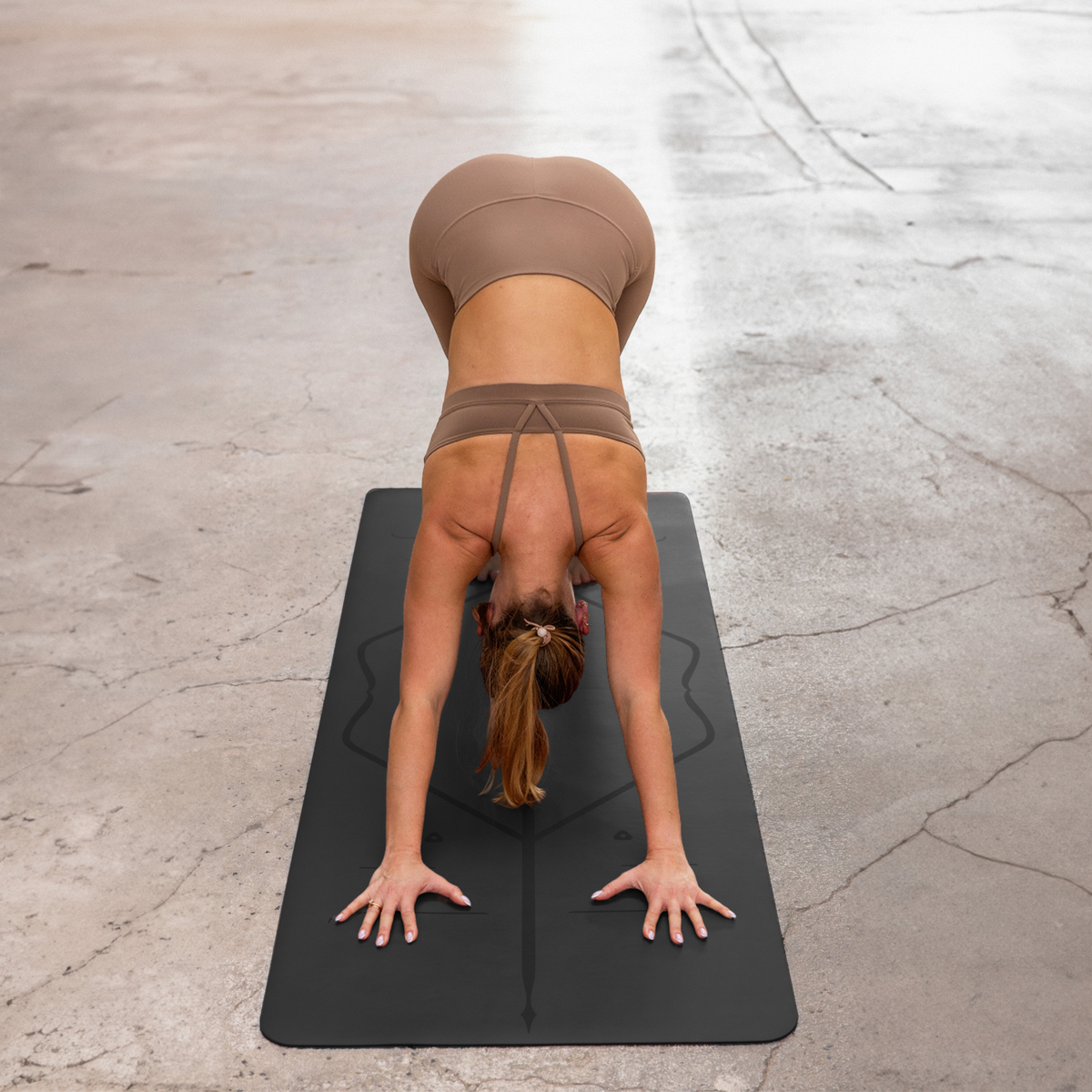
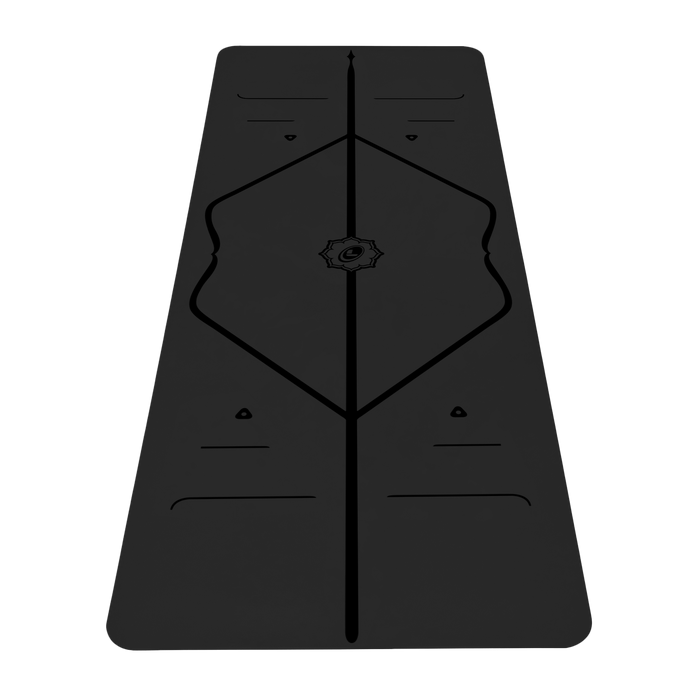
Previously often described as the Original, the current Classic pairs a natural-rubber base with Liforme’s polyurethane top surface. Its printed alignment design gives a consistent visual reference for where you place your hands and feet during practice.
The 185 × 68cm footprint and 4.2mm thickness suit shoppers who want more room without a very soft base. Let the surface dry flat after practice and follow the brand’s cleaning guidance to protect the top layer.
Before you choose: It is a mixed-material mat, not simply a sheet of natural rubber. At about 2.5kg, it also asks more of your shoulder than a lightweight travel mat.

Yogi Bare Original PAWS
- 4mm profile
- Natural rubber and PU
- Alignment markings; check version dimensions
PAWS is another option for shoppers who prefer a polyurethane practice surface over natural rubber. The Original range includes alignment cues and a 4mm profile, creating a useful alternative to a thicker foam mat for regular flows.
This is worth comparing with Liforme if you like a smooth surface and visual guides. Spot-clean the mat as directed, keep oils away from the surface, and let it dry fully before storing.
Before you choose: Check the particular Original PAWS listing: sizes and designs differ between generations. The material mix includes PU, so avoid treating a natural-rubber base as proof that the entire mat is plastic-free.
Choose with confidence
Buying and care advice
What does eco-friendly actually tell you?
Treat it as a starting point for questions. Ask what the mat is made from, whether any recycled-content percentage is stated and which disposal route is actually available where you live. Do not put rubber, PU or TPE mats into household recycling unless your local service explicitly accepts them.
Cork is a surface material rather than a complete construction: the backing might be natural rubber or TPE. The same distinction applies to jute mats. If you prefer a woven cotton surface, our yoga rug guide explains when a fabric layer needs a grippy mat underneath.
Buy for the floor and class you really use
Test whether the mat lies flat and stays put on your normal practice floor before attempting challenging balances. Clean, dry flooring matters as much as the surface under your hands. For very sweaty classes, check how the manufacturer manages moisture and whether a towel is recommended.
For travel, weight and packed size deserve as much attention as thickness. A lightweight mat may need extra padding under knees; a thicker home mat may be awkward to carry across an airport.
Make your next mat last
Follow the model’s care instructions instead of making one cleaning mix for every material. Do not assume that essential oils, alcohol sprays, machine washing or long sun exposure are suitable. Dry the mat completely before rolling it and keep it away from hot cars and radiators.
Before you choose
Common questions
Is TPE a natural material?
No. Thermoplastic elastomers are synthetic materials. A TPE mat may be light and comfortable, but PVC-free or eco-friendly labelling does not make it a natural-fibre product.
Can I use a natural-rubber mat with a latex allergy?
Do not assume it is suitable. Natural-rubber mats may retain latex proteins even when described as almost latex-free. Choose a clearly documented alternative and follow the manufacturer’s allergy guidance.
Should I replace a PVC mat with a greener one now?
If your mat remains safe and useful, keeping it in service avoids an immediate replacement purchase. Replace it when its grip, integrity or suitability no longer meets your needs, then investigate reuse or a verified take-back scheme.
Sources and review notes
Product information and source links were reviewed on 24 October 2026. Manufacturer specifications describe the particular model listed; colours, sizes and versions may differ.
The verdict
Choose what suits your practice.
Start with material clarity, then choose the grip, support and size you will want to use regularly. Check the exact model and seller on Amazon before buying.
Return to the comparison ↑Continue exploring
More useful guides

About Rob Horsfall
Rob has been interested in spirituality since visiting India in 2002. After completing his philosophy studies at university, he continued studying the Buddha's teachings in Sri Lanka. He returned in 2011 and now spends his time developing Review My Retreat, studying acupuncture and integrating insights from different spiritual traditions into everyday life.
You must be logged in to post a comment.