

The practical guide 2026–2027 update
My Bufo ceremony experience.
The account and the evidence.
A historical first-person account from Barcelona, with a separate update on research, risks, consent and the limits of personal testimony.

About this guide: This is an informational account for adults, not a clinical assessment or treatment recommendation. The original experience was published in August 2024; the editorial update is separately identified. Review My Retreat offers paid marketing services to retreat providers.
“Bufo ceremony” is commonly used for a facilitated session involving 5-MeO-DMT, a potent psychedelic found in the defensive secretion of the Sonoran Desert toad and also made synthetically. Ceremonial language, a calm setting and strong personal meaning do not establish safety or medical effectiveness.
I attended a group ceremony in Barcelona and wrote about the experience in 2024. The account below retains what I described before, during and after it. The research and risk sections are a separate editorial update. My positive recollection cannot predict another person’s response.
Start here
A personal experience and a clinical result answer different questions. 5-MeO-DMT can profoundly alter awareness and carries physical and psychological risks. Do not stop or change prescribed medication for a ceremony on a facilitator’s advice. Concerns about medicines or a past experience belong with an appropriately qualified health professional.
At a glance
My ceremony at a glance.
On smaller screens, scroll across the table to see every column.
| Part of the account | What I reported | How to interpret it |
|---|---|---|
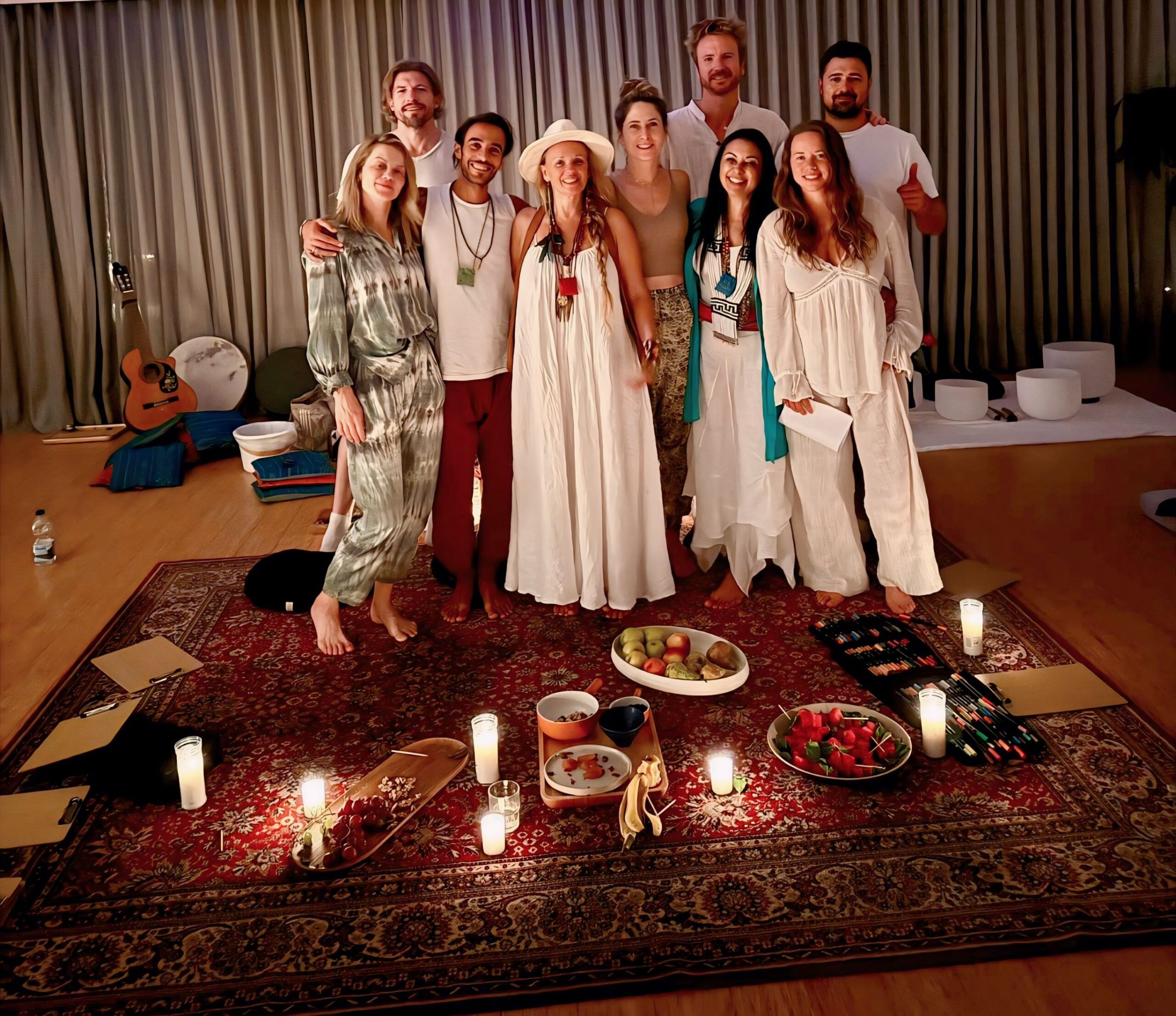
| Location and setting | A yoga studio in Barcelona; nine participants and three facilitators | Historical description, not a current provider or staffing promise |
| The whole evening | Approximately 8pm to 1am | Included introductions, waiting, the experience, music and sharing |
| My sense of time | Everyday awareness began returning after roughly 20 minutes | A subjective estimate, not a safe-use or recovery timetable |
| Follow-up | A group Zoom meeting about a week later | Part of my experience, not proof of clinical aftercare |
| Scope of the article | One person’s recollection | Not a controlled study, diagnosis or endorsement |
Before the ceremony: travel, nerves and meeting the group.
Rob’s original experience, edited for clarity. This is the account first published on 25 August 2024. It is not a newly attended session, and the exact date of the ceremony was not recorded here.
The evening began at around 8pm in a yoga studio in Barcelona. I met the other eight participants, and one told me she had spent a week in the city preparing. I had flown in that day after returning from a festival in Germany, and I began to wonder whether I had given myself enough time.
We were welcomed by Ness, the lead facilitator, with two assistants. We introduced ourselves and spoke about why we were there and how we felt. The group had a noticeable sense of nervousness. I felt a tightening in my stomach and noticed my heart beating faster than usual.
I had heard people describe the experience as feeling like a near-death event. I wondered whether I was ready for something so unfamiliar.
Before the main session, we danced to familiar music, including Bob Marley and Bobby McFerrin. For me, that lightened the atmosphere. The facilitator then explained how she intended to structure the evening. The original account also described a separate tobacco-based Hapé ritual; it was another substance exposure, not evidence that the main session had become medically safe.
I remember feeling torn between anticipation and wanting to back away. That uncertainty belongs in the account.
The onset: an intense change in perception.
The main experience was more intense than anything I had previously encountered. My perceptions changed rapidly. Ness’s face appeared to me like a colourful, vivid painting, and then my usual sense of the room seemed to fall away.
I found myself lying down, surrounded in my perception by bright geometric patterns. I could hear myself making sounds without understanding what they meant. The initial fear gave way to a profound intensity, followed by periods that felt quiet and peaceful.
At some points I experienced what seemed like pure presence, without a familiar sense of sound, sight or self. These are descriptions of perception, not a measurement of consciousness or proof of a spiritual or therapeutic explanation.
My experience had vivid imagery and a loss of ordinary self-awareness. Other people can report fear, an absence of imagery, gaps in memory or experiences that are difficult afterwards. One account should not be treated as a template.
Returning, music and a follow-up conversation.
After what I estimated to be about 20 minutes, my everyday awareness began returning. I tried to understand what had happened and what was happening around me. I remember images of loved ones and scenes that felt beautiful. A sense of glimpsing the future during an altered state is not evidence of a prediction.
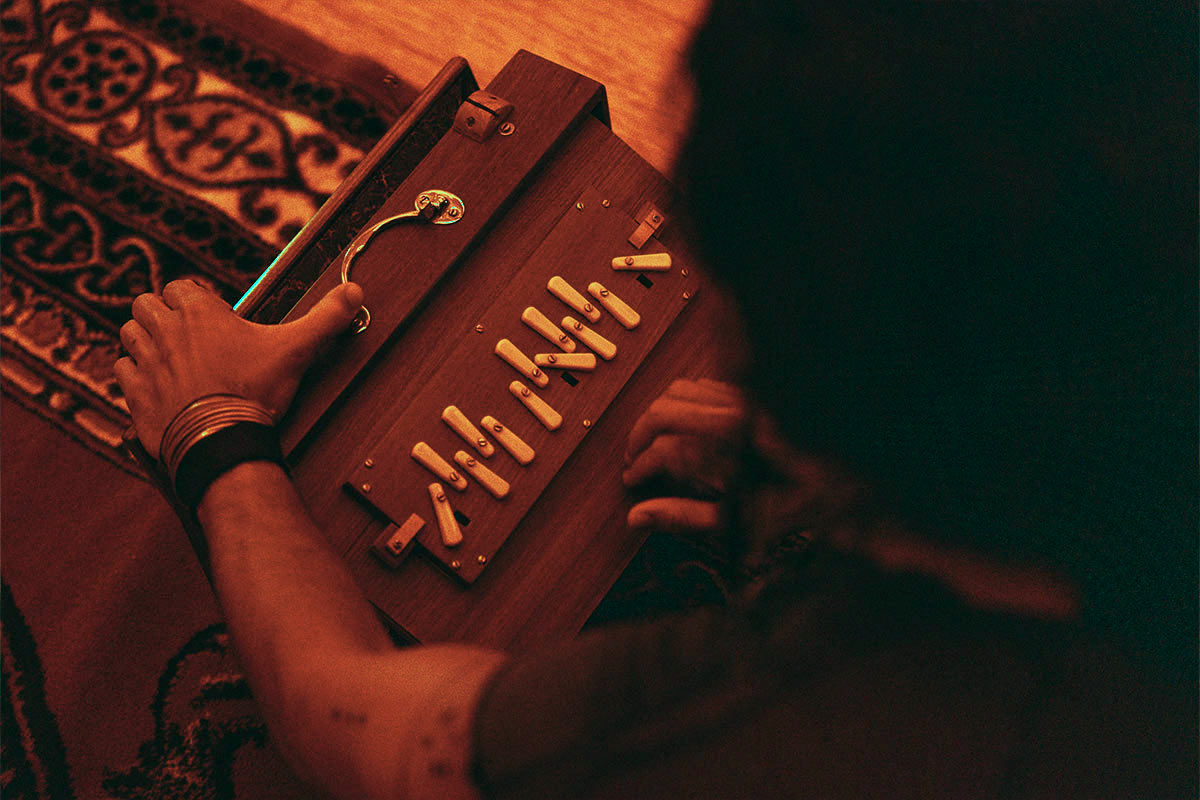
As the effects seemed to recede, I heard voices and music in the room. The facilitators were singing and playing instruments, including guitar and singing bowls. Some of the chants sounded familiar, and I joined in. When I removed the eye mask, I saw the musicians surrounded by candles.
Later, we sat in a circle with fruit, nuts and chocolate. We were given colouring pens and invited to express what we had experienced on paper. I found both speaking and drawing difficult, but the purpose seemed to be expression rather than an accurate picture. We then shared our different accounts with the group.
Stepping onto the streets of Barcelona at around 1am felt like a sharp contrast with the room I had just left. I felt that the acute effects had worn off, but that was my subjective impression, not an objective test of recovery or fitness to travel.
A week later, there was a group Zoom call to talk about what had happened and anything that had arisen since. I valued reconnecting with the group and having another opportunity to reflect.
End of the historical account. Rob described the experience as intense, peaceful and difficult to express. That does not predict another person’s response or establish a setting’s ability to manage an emergency. The sections below are the current editorial evidence and risk update.
What the name refers to.
The Sonoran Desert toad, Incilius alvarius, was formerly called Bufo alvarius; the older name remains in ceremony descriptions. Its defensive secretion contains 5-MeO-DMT, but toad secretion and a manufactured pharmaceutical formulation are not interchangeable products.
5-MeO-DMT is different from N,N-DMT. It is also different from ayahuasca, a preparation with a different composition and risk profile. Similar names and shared ceremonial language can conceal important differences.
The acute experience can be brief while the psychological effects and need for support extend much longer. My estimate of 20 minutes describes when familiar awareness began returning for me. It should not be used to decide when someone is safe to leave supervision, travel or resume responsibilities.
What research can—and cannot—establish.
Research has moved beyond personal stories, but different kinds of evidence should be kept separate. A small retrospective study, a short safety trial and a randomised study in a selected patient group answer different questions.
A mystical-experience score is not a recovery rate
The often-quoted 2018 study of 20 retreat participants reported that 75% met its questionnaire threshold for a “complete mystical experience”. Only a minority of the original retreat respondents completed that questionnaire. It measured an acute subjective experience; it did not show that trauma was healed or establish the safety of commercial ceremonies.
Controlled clinical research is developing
A 2026 randomised phase 2b trial in 81 patients studied a synthetic formulation, GH001, in treatment-resistant depression. It found greater improvement in depression scores at day eight than placebo. That is evidence about a specified clinical intervention in screened patients, rather than a test of informal Bufo ceremonies or a guarantee for an individual.
Published on 25 March 2026, the trial was funded by GH Research. Its blinded comparison lasted one week; the authors noted that the noticeable psychoactive effects could reveal treatment allocation. During the later open-label follow-up, most initial remitters needed further treatment. These limitations matter when interpreting the result.
The clinical question also differs from a claim that a ceremony heals trauma. Further evidence about longer-term outcomes, different populations and adverse effects is needed. A strong or meaningful experience should not be treated as proof of medical benefit.
Short-term tolerability does not settle long-term risk
A 2024 review of clinical trials described generally favourable short-term tolerability in the controlled studies it included, while noting limited follow-up and reporting issues. Carefully selected participants and research safeguards should not be assumed to represent people using an uncertain substance in an unregulated setting.
Risks, medicines and professional support.
Profoundly altered awareness can leave a person unable to respond normally to their surroundings. Reported effects include fear, confusion, nausea or vomiting, involuntary movement and changes in cardiovascular measures. A brief duration does not remove the possibility of an acute emergency or later distress.
Medication interactions require clinical advice
The pharmacology literature describes dangerous interactions between 5-MeO-DMT and monoamine oxidase inhibitors (MAOIs), including severe toxicity. This also matters for other preparations containing MAO-inhibiting compounds. Research about many other combinations remains limited.
Do not stop, taper or change prescribed medicines to take part in a ceremony on a facilitator’s advice. A prescriber or appropriately qualified clinician should address medication concerns and the person’s medical and mental-health history. A questionnaire or a person’s confidence is not an equivalent assessment.
Consent and the limits of supervision
The European Union Drugs Agency highlights vulnerability, power imbalance and possible abuse during altered states, with particular concerns in unregulated settings. Consent to attend is not blanket permission for touch, restraint, recording or intimate contact. Boundaries and the ability to withdraw need to be clear before a person is impaired.
A calm room, several sober people or a facilitator’s reassuring manner cannot guarantee emergency competence. Clinical responsibility, safeguarding and access to professional medical help are separate questions from spiritual authority or peer support.
Difficulties afterwards deserve attention
“Integration” can describe reflection, journalling or conversation, but it should not explain away persistent distress as a necessary healing process. Ongoing anxiety, sleep disruption, confusion or changes in everyday functioning warrant professional assessment. Support should help a person understand what happened without imposing a spiritual interpretation.
If someone has serious symptoms, is in immediate danger or cannot keep themselves safe, seek urgent medical or local emergency help. The NHS urgent mental-health page explains UK support routes. Be open with health professionals about substances used; an enquiry form or delayed group call is not an emergency service.
Animal welfare, sourcing and the law.
Toad-derived material raises concerns beyond the person’s experience. These are wild animals producing defensive secretions. The US National Park Service identifies the Sonoran Desert toad and warns that its toxins can harm humans and pets.
The UC Berkeley overview discusses concerns about collecting the secretion and notes that the compound can also be synthesised. Synthetic origin does not make unsupervised use safe or prove that a product has a verified identity. Claims of a more “natural” experience do not resolve animal-welfare or medical questions.
Legal status depends on the substance, jurisdiction and circumstances and can change. An openly advertised ceremony, a spiritual description or a facilitator’s assurance is not evidence of legal permission. This article does not establish the legality of the historical session or offer a route to obtain the substance.
Questions people ask.
What does a Bufo ceremony feel like?
There is no universal experience. My account includes rapidly changing perception, imagery, loss of ordinary self-awareness and a peaceful return. Others can experience fear, little imagery, memory gaps or lasting distress.
Does the experience last only 20 minutes?
That was my rough estimate of when familiar awareness began returning. The whole evening lasted several hours, and effects or difficulties can continue beyond the acute period. It is not a recovery or safe-use timetable.
Is a powerful experience evidence that trauma has healed?
No. A subjective experience, a questionnaire result and a measured clinical outcome are different things. The clinical evidence described here does not validate a claim that any commercial ceremony heals trauma.
Was this a new visit?
No. It is Rob Horsfall’s historical Barcelona account, first published on 25 August 2024, with a separately identified editorial update.
Are the photographs from Rob’s session?
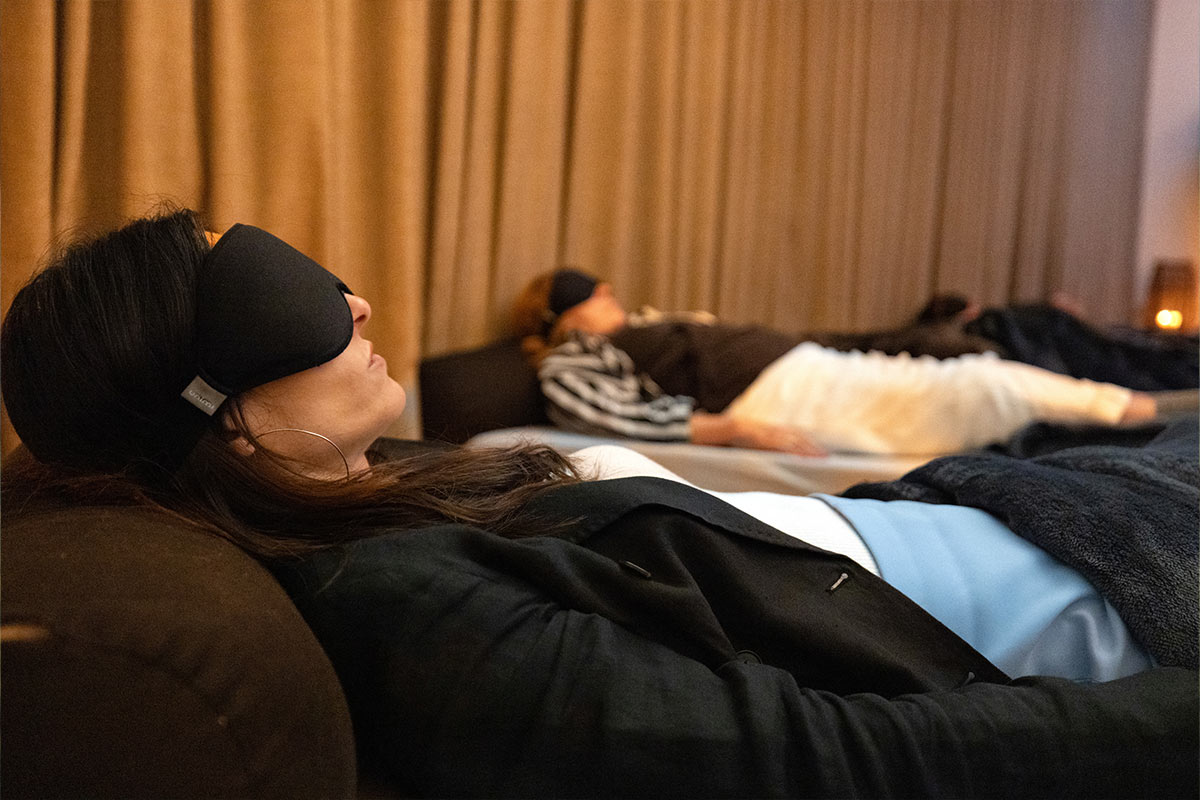
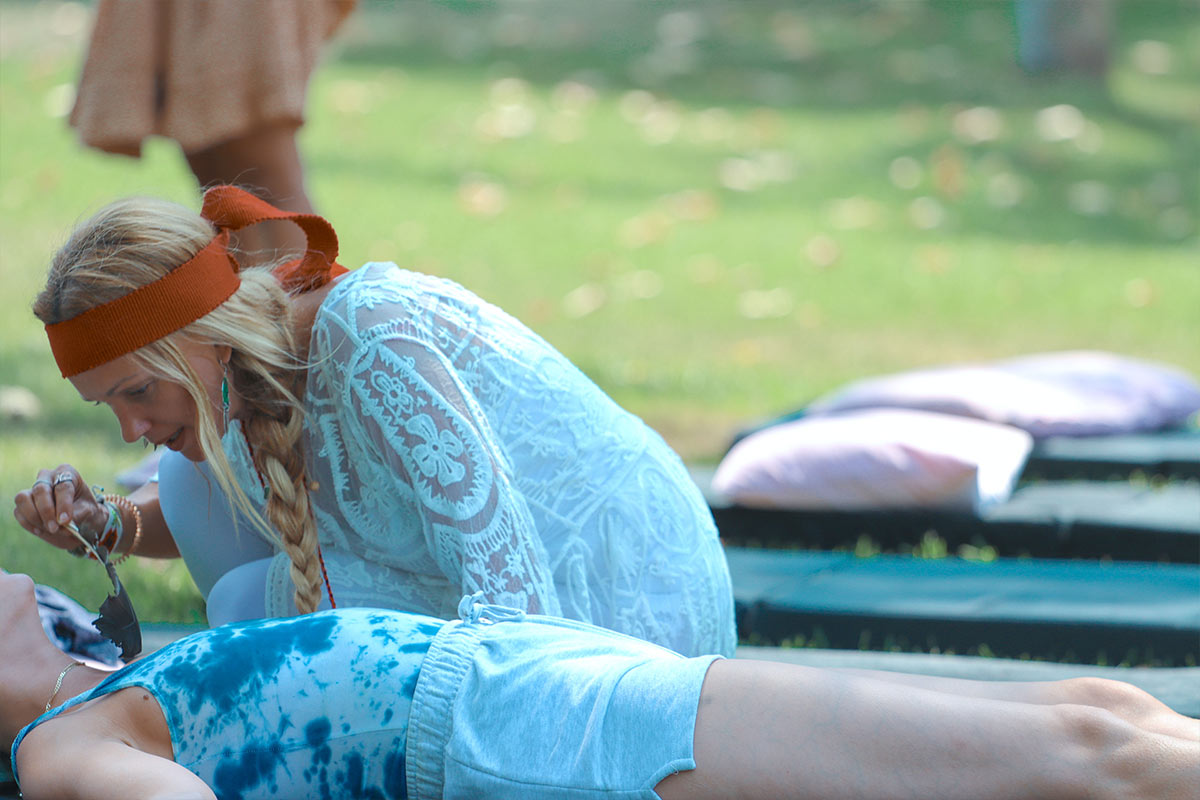
That has not been verified. They are retained documentary images from the article archive, rather than confirmed photographs of Rob’s session.
Sources and review notes.
Reviewed on 24 October 2026. The first-person material preserves Rob Horsfall’s original account and subjective timing. The separate research section includes the 2026 clinical trial and distinguishes it from ceremony testimony. The archive photographs have not been verified as images of the author’s session.
- GH001 versus placebo: 2026 randomised clinical trial ↗
- 2018 study: mystical-experience questionnaire and limitations ↗
- Clinical-trial safety review: short follow-up and reporting limits ↗
- 5-MeO-DMT metabolism and MAOI interactions ↗
- EUDA: therapeutic research and risks in unregulated settings ↗
- UC Berkeley: 5-MeO-DMT research, risk and animal-welfare overview ↗
- National Park Service: Sonoran Desert toad ↗
- NHS: urgent mental-health help ↗
For a correction, use our contact form.
Your next step
Keep the experience and the evidence distinct.
A meaningful personal recollection cannot establish medical safety, legality or a treatment outcome. If you need care for a health condition or support after a difficult experience, speak with an appropriately qualified professional.
Read about professional talking-therapy support ↗Keep exploring.
About Rob Horsfall
Rob has been interested in spirituality since visiting India in 2002. After completing his philosophy studies at university, he continued studying the Buddha's teachings in Sri Lanka. He returned in 2011 and now spends his time developing Review My Retreat, studying acupuncture and integrating insights from different spiritual traditions into everyday life.
You must be logged in to post a comment.